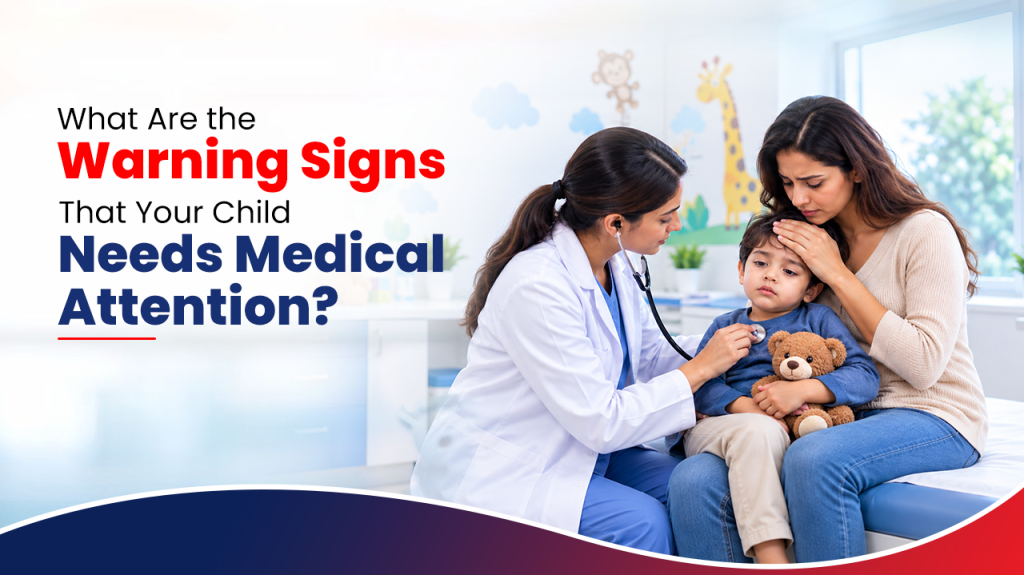
In most childhood illnesses, the best treatment is to lie down, drink plenty of fluids and receive proper care; however, there are certain warning signs that cannot be ignored. What parents/caregivers should watch: a change in a child’s behaviour, breathing, eating, activity and general appearance. Early detection of symptoms may facilitate families to receive medical advice when necessary. Access to pediatric care in Khalilabad can help families receive medical advice when necessary.
What should Parents look for as symptoms?
When symptoms are severe, sudden or worsening, some changes are a red flag that the child should be promptly assessed medically.
- Difficulty breathing
- Persistent high fever
- Severe abdominal pain
- Unusual sleepiness
- Repeated vomiting
- Signs of dehydration
- Sudden confusion
- Seizures
- Severe allergic reactions
- Bluish lips or skin
When is it Time to be Concerned about Changes in Behaviour?
Children’s behaviour may help to indicate the extent to which they are unwell. If your child is unusually difficult to wake up, confused, very weak or less responsive than usual, he or she may need emergency care. In addition, parents should be alerted when they notice a child is no longer drinking fluids or eating a significant amount of food for a prolonged period or if the child is much less active. These changes may occur along with infections, dehydration, breathing difficulties or other conditions that need to be assessed.
How to Identify Emergencies?
If a child has blue or grey lips, severe bleeding or suddenly becomes more difficult to wake up, they should have immediate medical attention. Parents are urged to follow their instincts if their child is really ill or gets worse quickly. A local emergency service or the nearest emergency department is more suitable for an emergency situation than a routine appointment. A child specialist doctor in Khalilabad can also provide appropriate medical guidance when needed.
- Breathing is very difficult or breathing occurs at a rapid pace.
- Child passes out, is hard to wake up or not responsive.
- The seizures are happening, especially if the child has not had seizures before.
- The lips, face and/or skin turn blue or grey.
- If you are injured, the bleeding is significant, the pain is intense or you are unusually sleepy (drowsy).
What to do if symptoms last – Parents?
Not all concerning symptoms are emergencies, but any symptoms that are worsening or have persisted should be evaluated by a health care provider. Parents should pay attention to when the symptoms started, if they are getting more common and if the child is still drinking, eating, urinating and behaving normally. These facts will assist health care providers to understand the situation more fully.
- Appropriate home care measures are not effective in alleviating symptoms.
- Fever repeatedly returns
- Child takes in less food and drink.
- The need to urinate is reduced.
- The pain continues to increase in intensity
- Normal activities are hampered by coughing
- Child has less than normal energy.
- Symptoms suddenly change
Conclusion
Not all symptoms need emergency treatment, but if there are any that persist or are worrying, then it is important to speak to a health care professional about these. When parents seek advice on healthcare matters that are easy to access and professional help is needed, they might want to consider Kalpit Healthcare as the best hospital for child care in Khalilabad for suitable medical help.