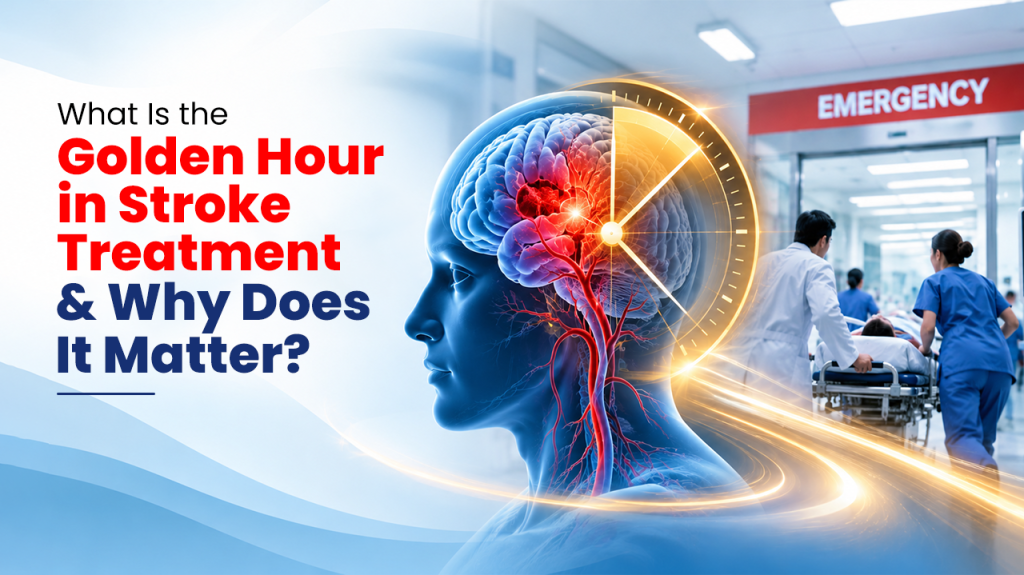
When blood stops flowing to an area of the brain or a blood vessel in the brain bursts, this is called a stroke. Left untreated, the brain cells can be damaged, and this may cause permanent disability or death. The golden hour of stroke treatment is the critical time to get immediate medical attention after symptoms of stroke appear. The first hour is the most critical, but treatment can be beneficial after the first hour.
What is the ‘Golden Hour’ in the Treatment of Stroke?
The golden hour is the critical first hour after the stroke has started to happen, which is the time during which a person can be rapidly assessed and treated to minimise damage to the brain. There is no set time limit; if you don’t treat, you don’t get the chance. A neurologist for stroke will be able to decide on treatment based on the type of stroke, when it happened, imaging tests, and the medical history.
- Rapid symptom recognition
- Emergency medical assistance
- Immediate hospital assessment
- Urgent brain imaging
- Timely treatment decisions
Why Every Minute Counts in a Stroke?
In an ischemic stroke, a blood clot cuts off the blood supply to the brain, which makes brain cells lose oxygen and nutrients. The more the blood is deprived, the more damage is likely to be done. Treatment will be quick in patients who are qualified, and blood flow will be restored, which will decrease complications. Bleeding and controlling the pressure in the brain are first among the doctors’ concerns when it comes to haemorrhagic strokes.
- Protection of brain cells: The timely medical treatment can minimize damage from a lack of blood flow.
- Treatment eligibility: If they arrive early, doctors will be able to tell if the patient is a candidate for treatment, such as clot-dissolving drugs.
- Minimization of disability: If it’s appropriate, they will have better disability outcomes and can function normally.
- Rapid diagnosis: A rapid image of the brain can help distinguish blocked blood vessels from bleeding in the brain.
Identifying Signs and Symptoms of Stroke and Reacting to Them
Recognizing stroke symptoms and treatment options can help save valuable time for the family and save lives. The BE FAST approach is a technique to help remember the warning signs.
- Balance: Monitor for sudden dizziness, loss of balance, or difficulty walking.
- Eyes: A sudden decline or loss of vision or a change of vision in one or both eyes.
- Face: Check for droop on one side of the face when smiling.
- Arms: Be sure to look for weakness or issues with raising one arm.
- Speech: Pay attention to slurred speech or problems with understanding simple sentences.
- Time: If any warning sign is noted, seek medical assistance right away.
What Happens When a Patient Reaches the Hospital?
The treatment usually involves talking about the stroke symptoms, taking blood pressure and other measurements, and promptly ordering an imaging technique to help identify the type of stroke. Treatment is different, depending on the person and the type of stroke, if it is a haemorrhagic stroke. A neurologist in Khalilabad can help with the assessment and management of stroke-related medical needs.
Conclusion
The golden hour emphasizes the importance of recognizing stroke symptoms and obtaining emergency medical care without delay. Early assessment can improve access to appropriate treatment and potentially reduce lasting complications. For emergency evaluation and stroke-related medical care, Kalpit Healthcare can be considered as part of your healthcare planning.