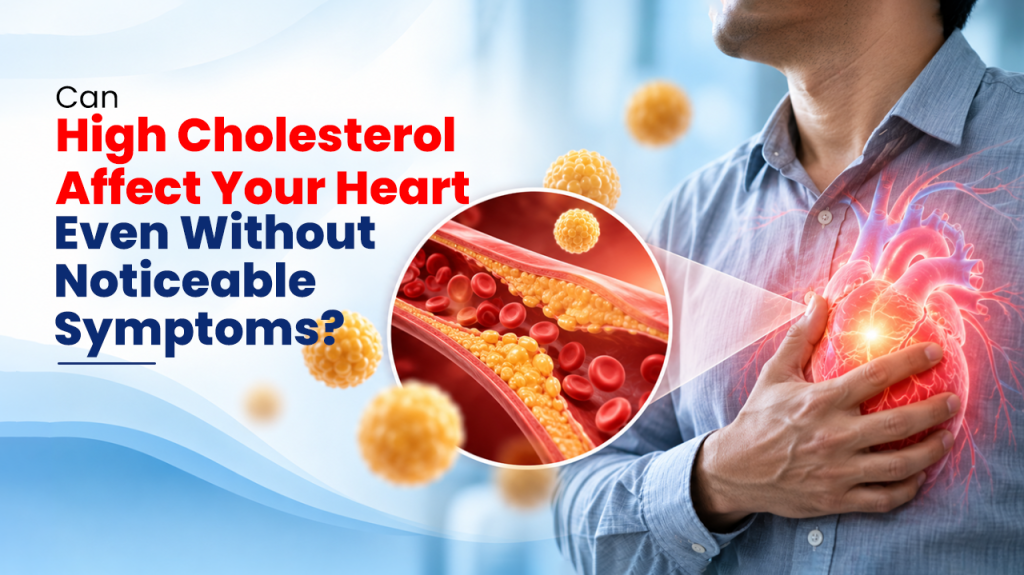
Elevated blood cholesterol levels are a prevalent health issue that may impact the heart yet not present any signs or symptoms. But many people feel no symptoms as cholesterol builds up over time and only find out that they have high cholesterol through a blood test. As the years go by, too much cholesterol can build up in the arteries, which can lead to severe heart and blood vessel diseases. Recognising the effects of high cholesterol on the heart, the risk factors, factors that could contribute, and having regular health checks can help maintain the health of the heart in the long run.
Why Can High Cholesterol Go Undiagnosed?
High cholesterol typically doesn’t have any warning signs and does not produce pain or discomfort. An individual can go on living without being aware that fat is being deposited in the walls of the arteries. This can cause these deposits to block the arteries and decrease the amount of oxygen-rich blood reaching the heart.
There are several reasons that people may have high cholesterol:
- Unhealthy lifestyle behaviours: Eating too many saturated and trans fats.
- A sedentary lifestyle that impacts on cholesterol balance: Limited physical activity.
- Family history: Conditions that run in the family which raise cholesterol.
- Pre-existing health issues: Diabetes, overweight, and some other diseases.
How a heart specialist will help understand cholesterol excess effects?
Too much low-density lipoprotein (LDL) – or bad cholesterol – may lead to plaque buildup within artery walls. This is called atherosclerosis and causes the arteries to slowly become hard and inflexible. A plaque that breaks free can cause a blood clot to form, which can slow or block blood flow, leading to a heart attack.
High cholesterol can lead to an increased risk of:
- Coronary artery disease: When the blood flow through the arteries of the heart is decreased.
- Heart attack: Sudden blockage which injures the heart muscle.
- Acute coronary syndrome: Interruption of blood supply to part of the heart.
- Peripheral artery disease: This is a condition where the blood supply to the limbs is decreased.
What to Be Aware of?
While high cholesterol doesn’t usually cause symptoms, symptoms may develop as a result of the complications of narrowed or blocked arteries. If a person has chest pain, shortness of breath, unusual tiredness, or arm, jaw, back, or neck pain, it may be a heart problem. The symptoms are not specific to cholesterol, however, and should never be dismissed. Never wait for symptoms to go away or think that symptoms are due to indigestion.
What Can You Do to Keep Your Heart Healthy?
Total cholesterol, LDL, HDL (high-density lipoprotein), and triglycerides are measured by a blood test known as a lipid profile. Testing on a regular basis can help detect abnormal levels of toxins before complications arise. Testing guidelines are based on age, family history, presence of underlying disease, and cardiovascular risk. Consulting the best cardiologist in Khalilabad can also help individuals receive professional advice on maintaining their heart health.
Conclusion
High cholesterol can have a devastating impact on heart health without causing any symptoms for years. Taking regular blood tests to monitor cholesterol levels, clean eating, and regular medical advice can help minimize cardiovascular problems. When it comes to heart health assessments and preventive measures, Kalpit Healthcare could be the ideal option for professional advice, empowering individuals to make informed choices regarding their cardiovascular health.